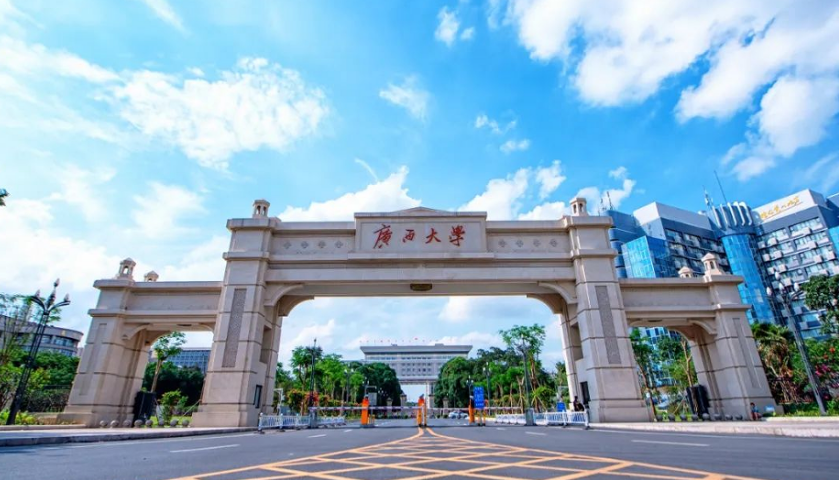
Recently, the "One Database, One Table, One Platform" system, meticulously developed by Guangxi University, successfully completed its final acceptance inspection. The information platform adopted Lifeng's micro-module data center integrated solution and was officially put into operation, providing 24-hour uninterrupted robust support for the secure and stable operation of the system.
Guangxi University is located in Nanning, the capital of Guangxi, known as the "Green City of China." It is the sole institution in Guangxi to be included in the national "211 Project," a "Double First-Class" initiative, and a university jointly established by the Ministry of Education and the People's Government of Guangxi Zhuang Autonomous Region.
Guangxi University was founded in 1928. In 1997, Guangxi University merged with Guangxi Agricultural University (originally developed from Guangxi College of Agriculture) to form the new Guangxi University. In 1999, the newly established university was included in the Ministry of Education's national "211 Project" for key university construction. In 2017, it was selected as part of the national "Double First-Class" initiative. In 2018, it became a "Ministry-Region Co-construction" university under the collaboration between the Ministry of Education and the People's Government of Guangxi Zhuang Autonomous Region. In 2022, it was again selected for the second round of the national "Double First-Class" initiative.
The school covers an area of approximately 21800 acres, with a total collection of 9.2 million volumes of literature. It has over 25,000 full-time undergraduate students and 3,407 faculty members on active payroll. Among them, there are 575 senior professional technicians, 996 associate senior professional technicians, 2 full-time Chinese Academy of Engineering (CAE) members, and 69 individuals selected for national major talent programs.
The university adheres to the socialist direction of education and the fundamental task of fostering virtue through learning. It currently boasts 46 national-level first-class undergraduate major construction sites, 12 national characteristic majors, 3 national-level model courses, 2 national-level bilingual teaching demonstration courses, 7 national-level open model courses, and 17 national-level first-class undergraduate courses. The university actively builds a new framework for international engagement, having signed academic cooperation and exchange agreements with over 280 universities and academic institutions across 48 countries and regions worldwide. It maintains close collaboration with more than 90 universities and academic institutions in the ten ASEAN countries.
Guangxi University actively responded to the national call, seizing the opportunity of "Ministry-Region Joint Construction" to make educational digitalization a key driver for opening new development tracks and fostering new competitive advantages. Addressing prominent issues such as subpar data quality, insufficient efficacy, and lack of collaborative mechanisms, the university innovatively established a new data-driven educational governance system featuring "one database, one dashboard, one platform," taking solid strides on the journey of digital transformation.
The university's data governance practices have yielded fruitful results. In terms of management efficiency, various functional departments rely on public databases to automatically collect data and assist in report filling, significantly reducing workload and improving management efficiency. In terms of business processes, the "one database, one form, one platform" system has eliminated data barriers among research, finance, academic affairs, and personnel systems, advancing the automation of management processes, enhancing administrative efficiency, and transforming data governance from a phased task into a regularized mechanism.
The digital wave surges forward, driving iterative upgrades in educational governance. The data governance practice centered around the "one repository, one dashboard, one platform" system represents not only a technological advancement but also a profound transformation in governance philosophy, vividly illustrating how data serves as the key to unlocking the modernization of educational governance.
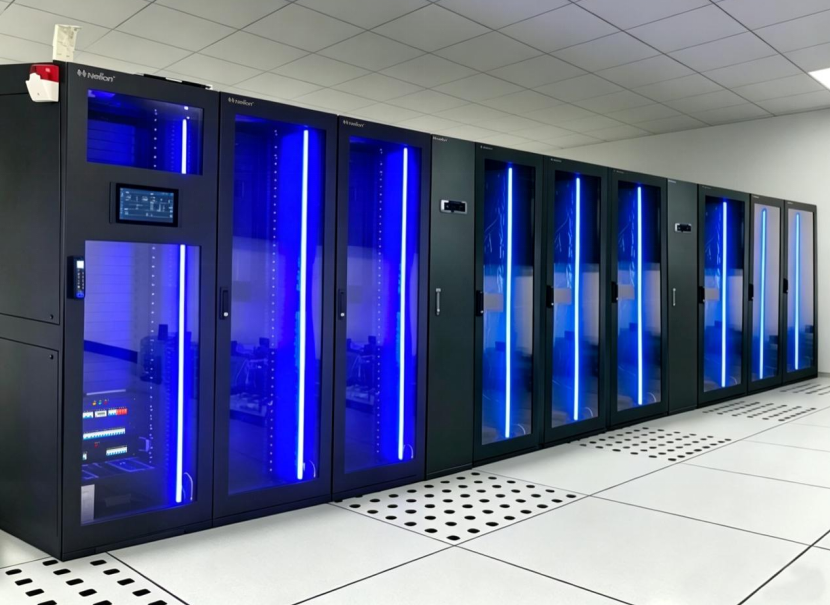
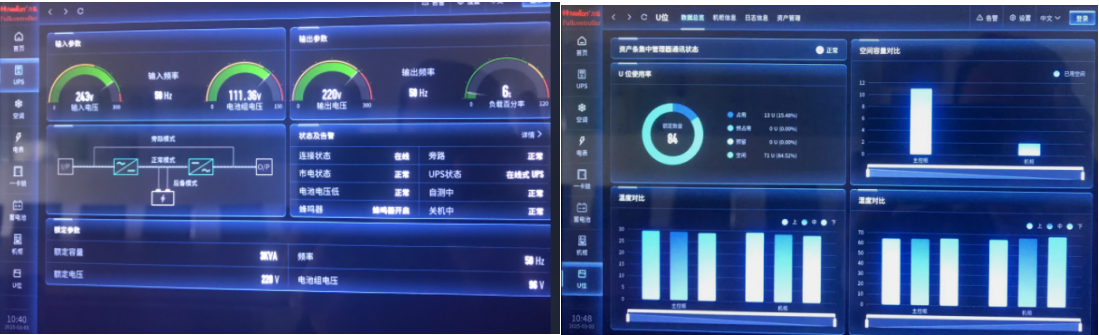
Netion's innovative small and medium-sized integrated data center product is based on the design concept of "productization of integrated data centers". It integrates functional modules such as uninterruptible power supply, refrigeration, intelligent power distribution, fire protection, environmental monitoring, and wiring management in a standard cabinet physical space, creating a highly reliable operating environment for core equipment such as servers. It can also achieve flexible deployment of the system according to user business expansion needs and is widely used in government, healthcare, finance, education, commerce, manufacturing and other fields.
Features of Netion Micro Module:
High Efficiency and Energy Saving
The front and rear cold passages of the cabinet are sealed to improve the cooling efficiency of the air conditioner.
Variable frequency compressor, matched with load size, reduces overall energy consumption.
stable and reliable
Support N+1/2N design to ensure stable operation of IT equipment.
Emergency fans are used for emergency cooling.
● Stable operation with ultra wide voltage input, equipped with power protection functions such as phase sequence detection.
● Intelligent call auto start function.
Low temperature components or long connecting pipe components can be selected to ensure reliable operation of the unit in more severe on-site conditions.
Fast delivery speed
Prefabricated in the factory, quickly assembled on site, plug and play.
Standard modular construction, easy deployment, quick deployment, no impact on later expansion, and a 50% increase in delivery target speed.
intelligent control
● Local display on a 10 inch large touchscreen, not occupying any USB space.
● Can manage intelligent devices such as UPS, air conditioning, and power distribution, as well as non intelligent devices such as temperature and humidity, smoke detectors, and access control.
Through the WEB interface, remote comprehensive monitoring of unmanned data centers can be achieved, ensuring stability and reliability. This enables remote monitoring of data centers with minimal or no human presence, providing strong guarantees for efficient management and safe operation of data centers.
Flexible and diverse
The cabinet, also known as the computer room, can be flexibly placed.
Standard configuration includes dual closure of cold and hot channels, or single closure of cold channels.


